SunnyRoyal Shade Sails, Privacy Screens & Pool Covers
Hang mass-produced shade fabric in May and you judge it in September: SunnyRoyal prints 95 to 98% UV block on the knit polyethylene, backed by 4.4 stars across 1,713 verified buyer reviews. Read the warranty text before you order, because three years in writing covers the privacy fence screens and roller shades and stops there, silent on the pool cover, the hedge wall and the commercial sail.
Your fence line, your balcony rail, your west-facing patio door: each takes a different fabric, and you can measure all three with the same tape. Knit polyethylene mesh zip-ties onto chain-link in an afternoon. A straight-edge sun shade sail cuts anywhere from 2 to 24 feet a side, so an odd patio corner stops being the reason you call a canvas shop for a quote. Pick the span first, then the grade: a chain-link run and a carport bay take different cloth.
What the fabric actually does
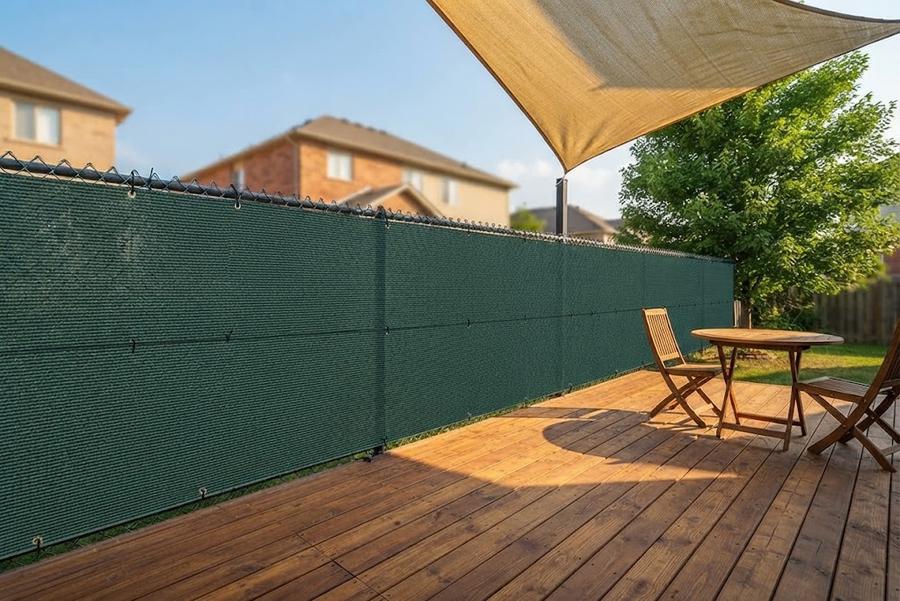
Zip-tie a fence screen along the rail in an afternoon and the weave still stops 95 to 98% of the UV, the exact figure printed per model
Stand a freestanding screen on its own iron poles where a fence used to be, and the yard closes off by the weekend with nothing dug or poured
Claim on a screen or roller shade inside three years and the written term answers; the pool cover, hedge wall and commercial sail carry no such text
Three years in writing on the privacy fence screens and roller shades, under normal weather and use
Ties packed inside the roll, so install day never stalls on a hardware-store run
Missing parts get shipped: one buyer had replacements delivered before the build and rewrote the review to say so
Our products
Start from the surface you are covering: a chain-link run, a carport span, a balcony rail, the water, or the west-facing door you shade at 5 p.m.
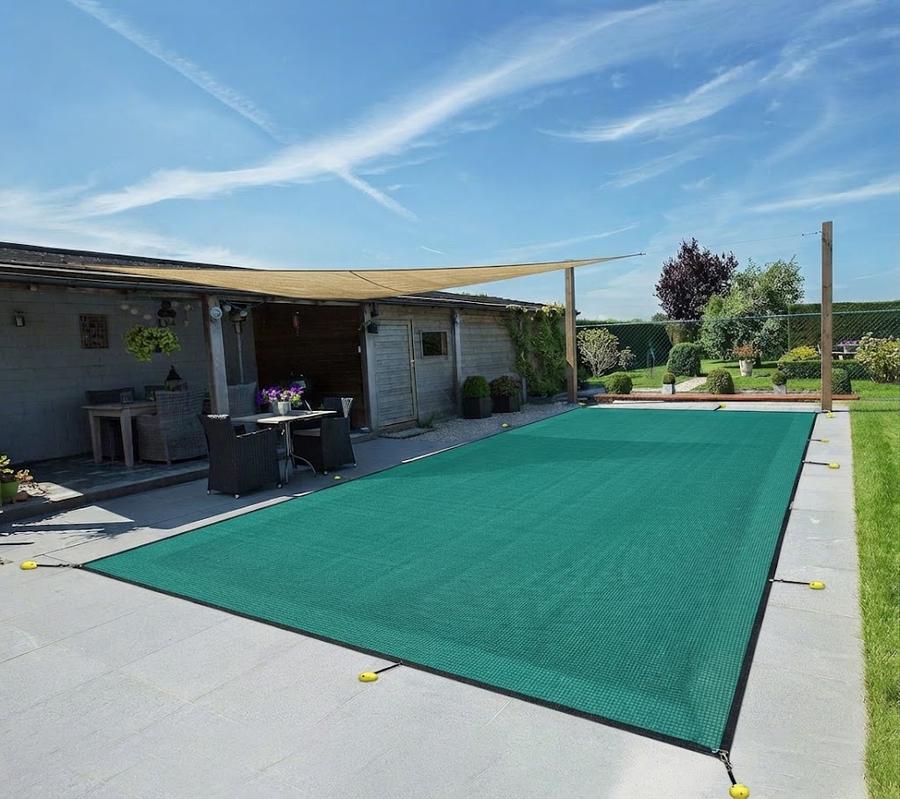
Mesh Pool Safety Cover, 10 ft x 10 ft
4.1 (225)
Pull a pillow-weighted tarp off a pool in March and half the melt comes with it, in pockets, onto the deck. This mesh pool safety cover drains instead: water passes through while leaves stay on top, and one owner logged no maintenance all snow season. Draw up the cable tighteners the afternoon the pool closes and the steel wire rope hemmed into the edge pulls the mesh taut in one pass. Cut the tape on the box that morning and the duplex wire clips and installation tools are already sorted inside, so nothing waits on a pool-store run. Where a wet vinyl cover fights one person across the deck every spring, this mesh stays light enough to drag off alone. Order a custom size when the pool is not a rectangle, then check today's price before the first freeze. Nobody stands on it, not a child and not a dog; no warranty text is stated.
Sheds a full snow season of melt through the weave while leaves stay on top, no pillows underneath
Draw the tighteners up once in October and the steel wire rope hemmed into the edge holds that tension until spring
Light enough to pull off alone, unlike a solid vinyl cover that fights one person once wet
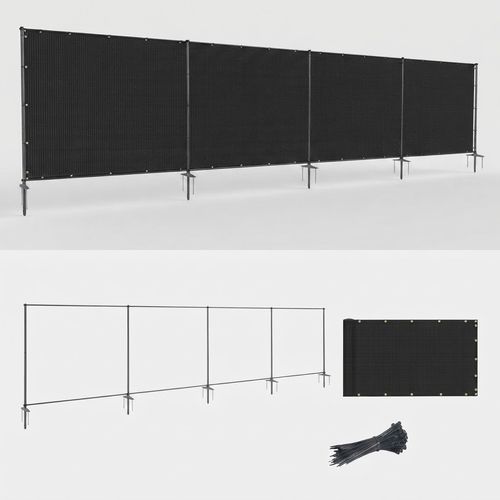
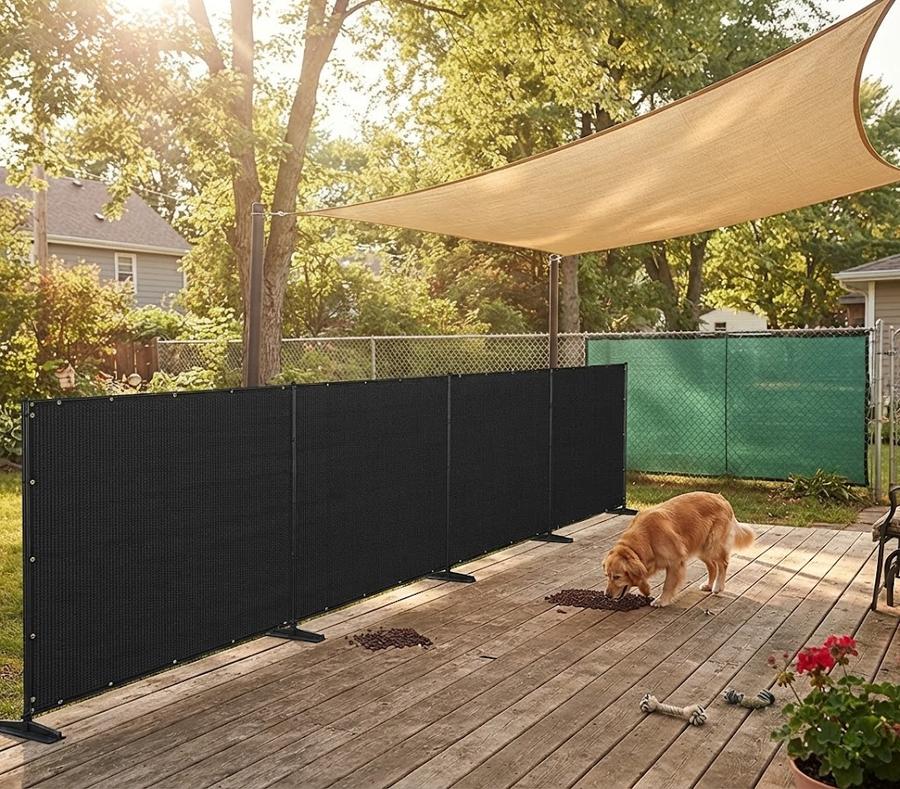
Straight-line winds take an aging wood fence down on a Tuesday and three dogs still need the yard by Wednesday. Iron poles, ground spikes and base mounts stand this 5-foot run up on soil or on a concrete slab without digging a post hole, and one owner assembled the whole thing alone in a little over an hour. Slide the pole height up on the low side of a sloped yard until the top rail runs level to the driveway. Watch the runoff cross the mesh after a storm that would pond behind a solid panel. Pictures-only instructions are what owners flag, usually an hour into the first build. The after-sale desk shipped missing parts back out before one owner's build day. Check today's price.
Stands a 5-foot-tall run across lawn or slab with no post hole, assembled solo in about an hour
Drive the spikes into soil at one end and bolt the base mounts to the slab at the other, one continuous run
4.0 stars from 125 buyers, several using it as an emergency dog run after storm damage
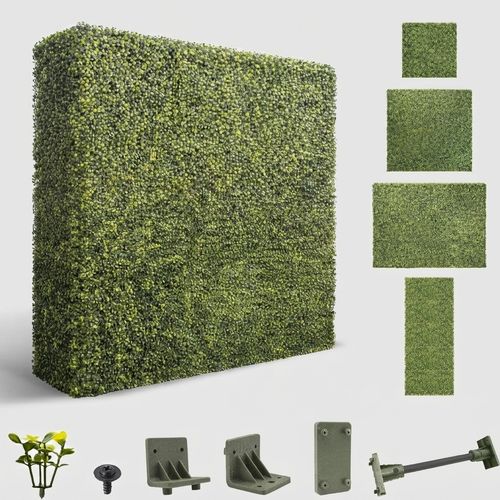
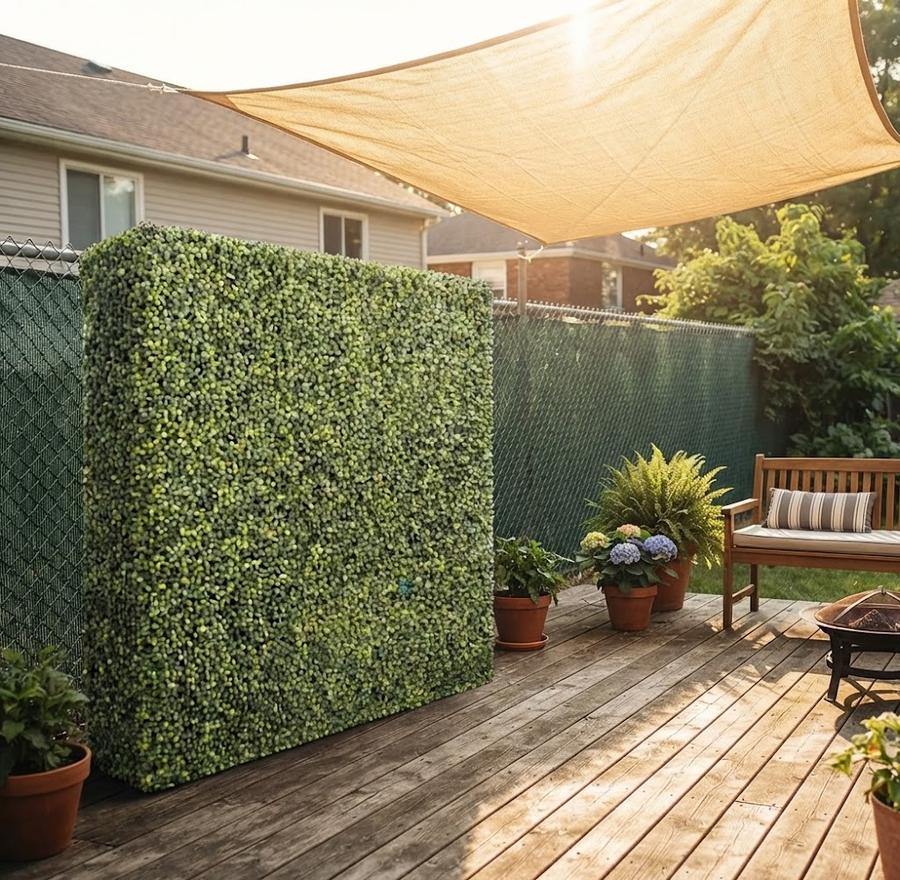
A bare balcony rail turns green in an afternoon when an artificial boxwood hedge wall stands on it, no timber frame bolted on first. Clip a second section onto the first on a Sunday afternoon and the green wall reaches the far end of the rail before dinner, still with nothing bolted underneath. Add the black aluminum base planter, sold separately, before the first gusty week and the run stops rocking on an exposed balcony. Lifelike high-density polyethylene foliage resists fading, and one owner reported no damage after a couple of major storms. Where a live hedge takes three seasons to fill in and a trim every spring, this fills the sightline the day it ships. Budget an evening for the build: assembly is simple but screw-heavy, and a fourth-floor owner in constant wind replaces the greenery every two to three years. Premium grade: check today's price before balcony season starts.
Set 72 inches of it against a bare rail and it carries its own weight through the season, no frame bolted on first
Clip sections edge to edge over one afternoon and the run extends into a full wall with no support rail underneath
Fills the sightline on delivery day, where a live hedge needs three seasons and annual trimming
Tension a sail across a parking bay for a full season of car traffic and you are doing a different job from shading a patio corner for an afternoon. Park under 26 by 40 feet of 240 GSM knit at noon and 98% of the UV stops at the fabric, the highest figure printed on any grade here. Bolt each of the four corners into structural steel or a poured footing before the first cable goes on, because the sail lands at 101 pounds. Order one cable rope per Super A-Ring ahead of install day, since the hardware kit ships separately. Where a lighter sail flutters and works its corners loose by the end of one windy season, wire cable inside the hem holds the shape through the next. Flagship grade: size the structural mounts first, then check today's price before install day.
Hang it over a 26 by 40 foot parking bay and 98% of the UV stops at the densest 240 GSM knit offered
Draw the cable rope up through each Super A-Ring and wire inside the hem takes a season of parking-bay wind a D-ring corner never sees
Leave it tensioned over a parking bay through one windy season and the corners stay where you set them
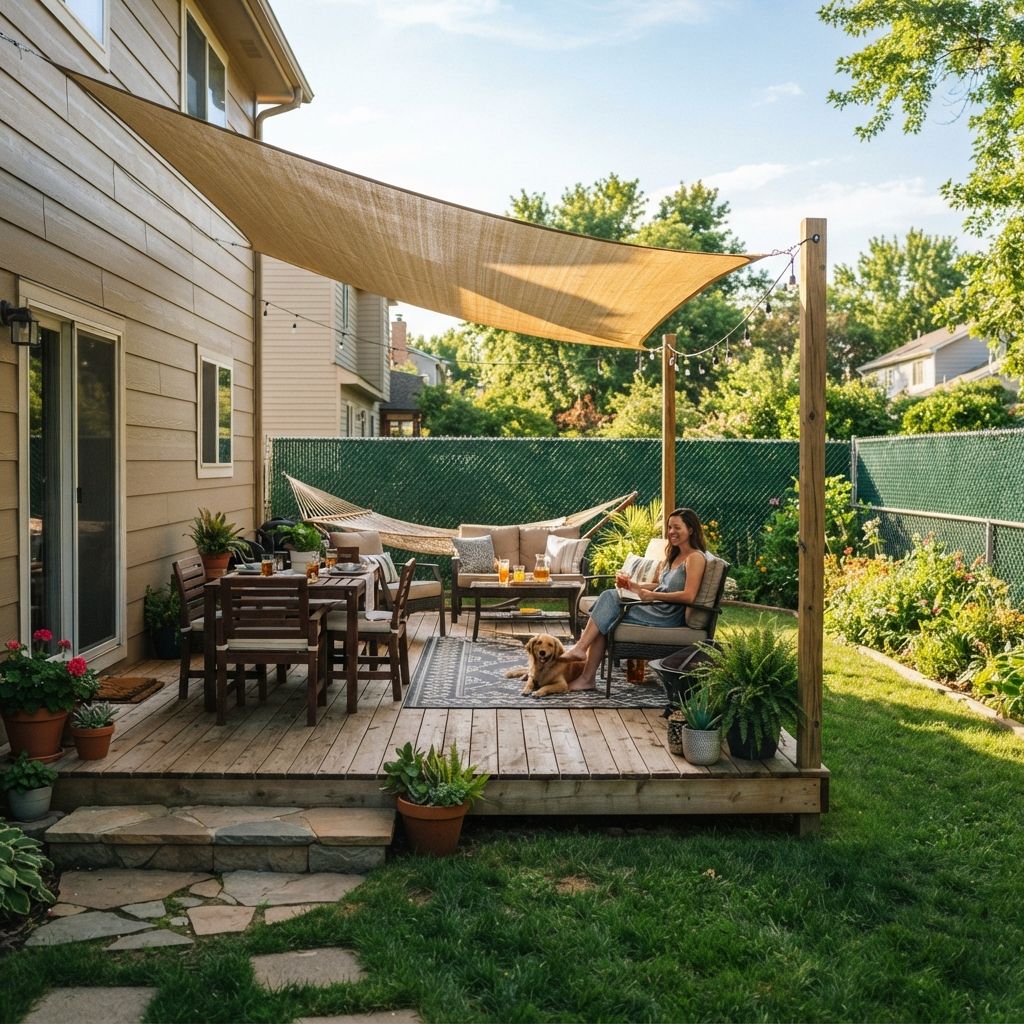
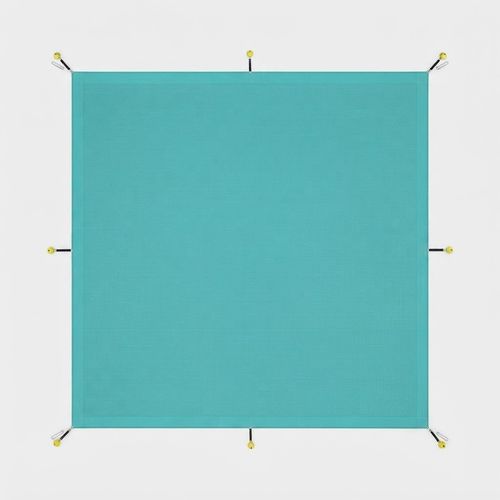
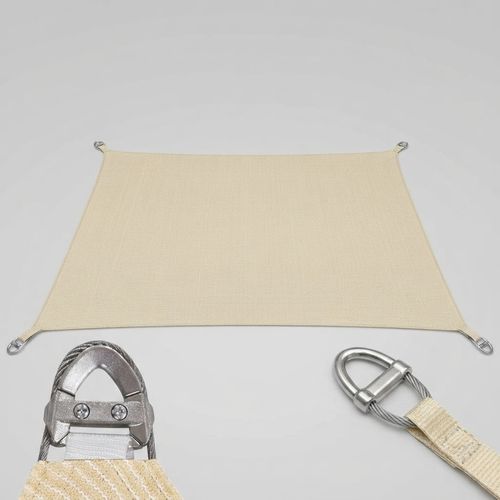
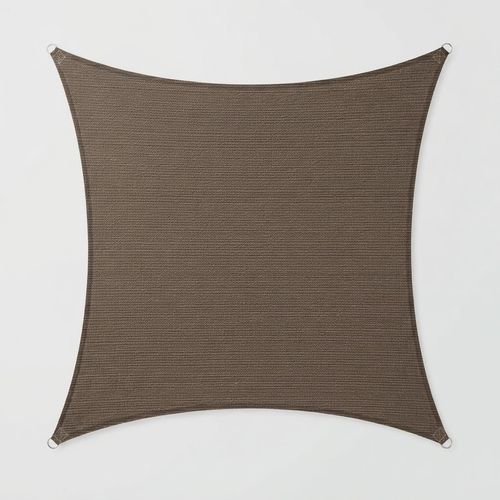
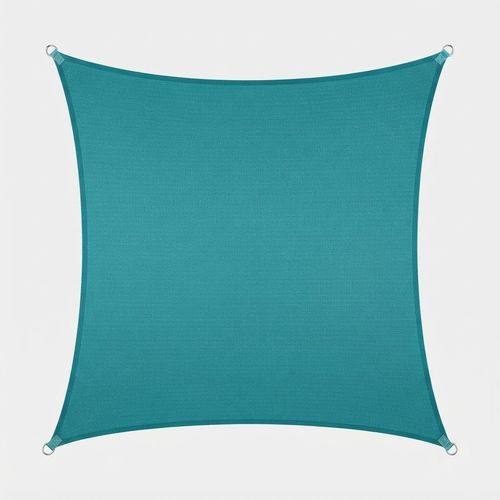
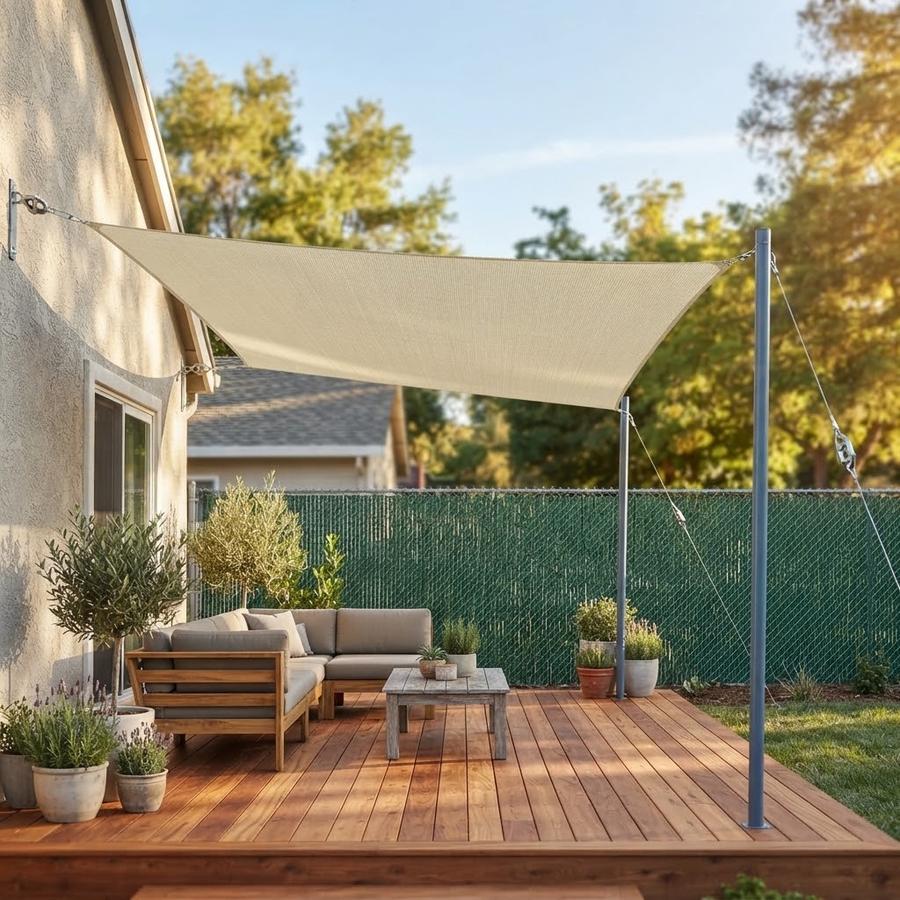
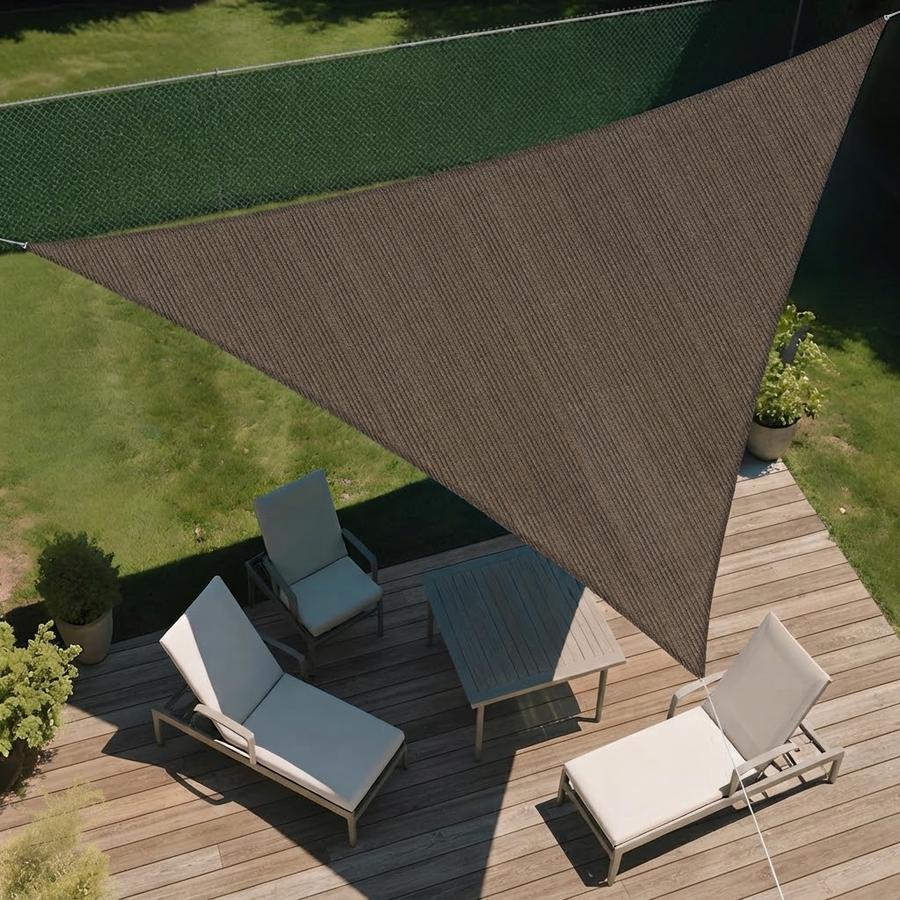
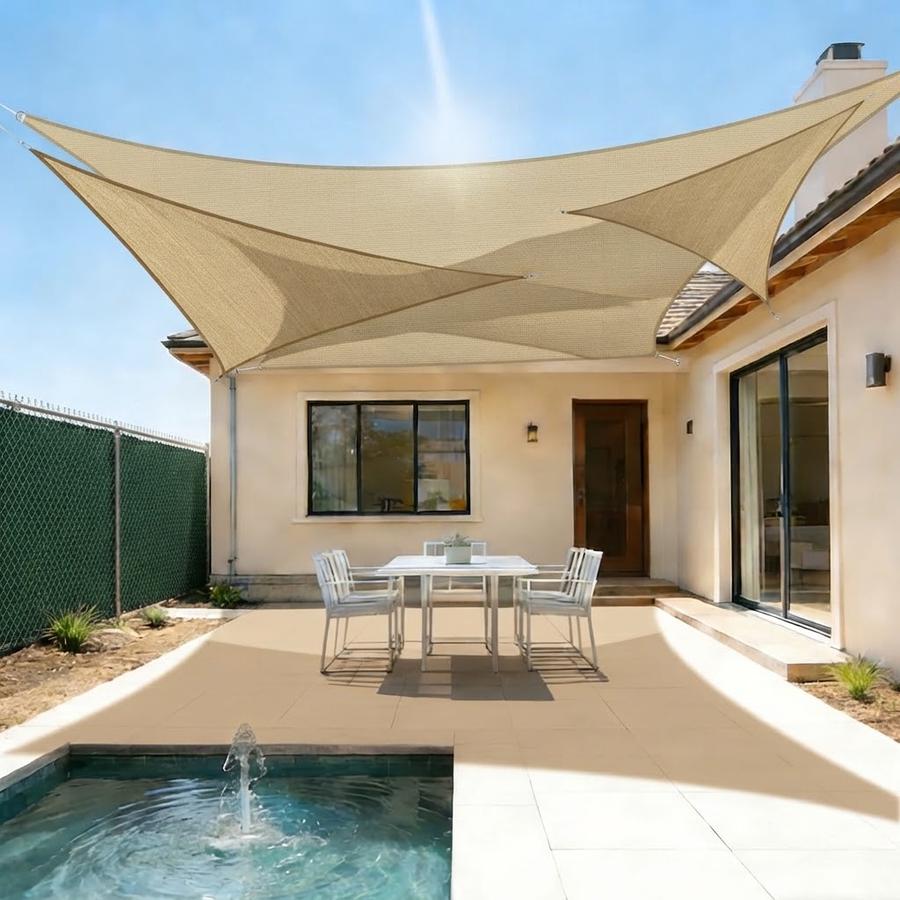
Measure an awkward deck corner, ask a canvas shop what a tailored sail costs, and the answer that comes back the same week is why buyers land here. One buyer here weighed a replacement canopy from the company that built their original frame and kept this instead. Stand under it at 2 p.m. and the 180 GSM knit still passes a breeze, at 95% and more of the UV blocked. Tie into brass grommets along every edge and stainless steel D-rings at the corners the same afternoon it arrives, with zip ties, ropes and bungee balls already in the box, so nothing waits on a hardware run. Order it anywhere from 2 to 24 feet a side to match an odd patio instead of trimming the plan to fit. A 36-month quality promise backs it through three summers on the same posts; check today's price.
Order it cut to the span you measured, so an odd patio corner needs no bespoke canvas quote
Sit under it at midday and the open weave lets heat escape upward while 95%-plus of the UV stops
Backed by a 36-month quality promise, with ties, ropes and bungee balls in the box
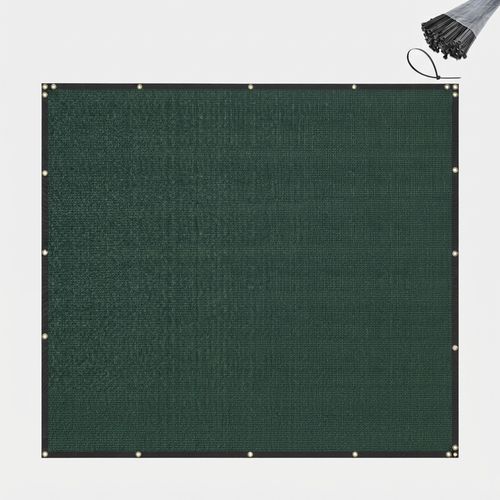
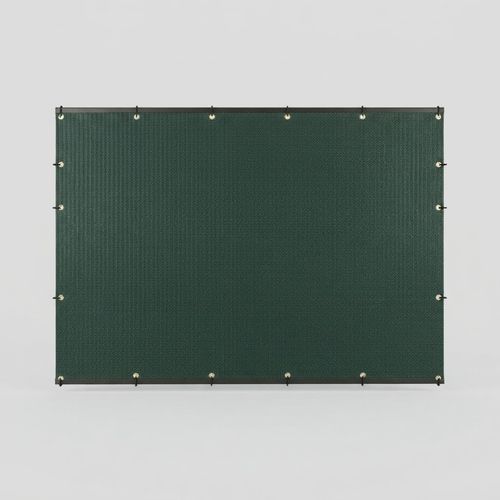
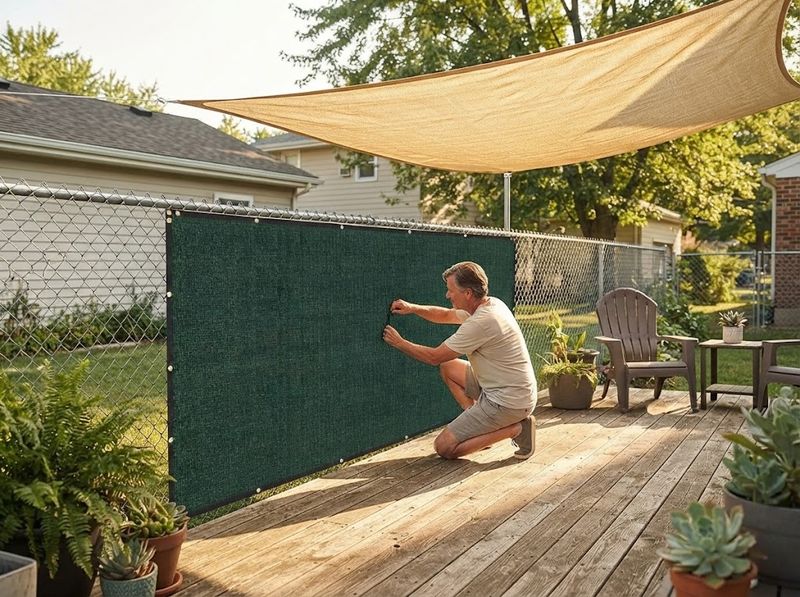
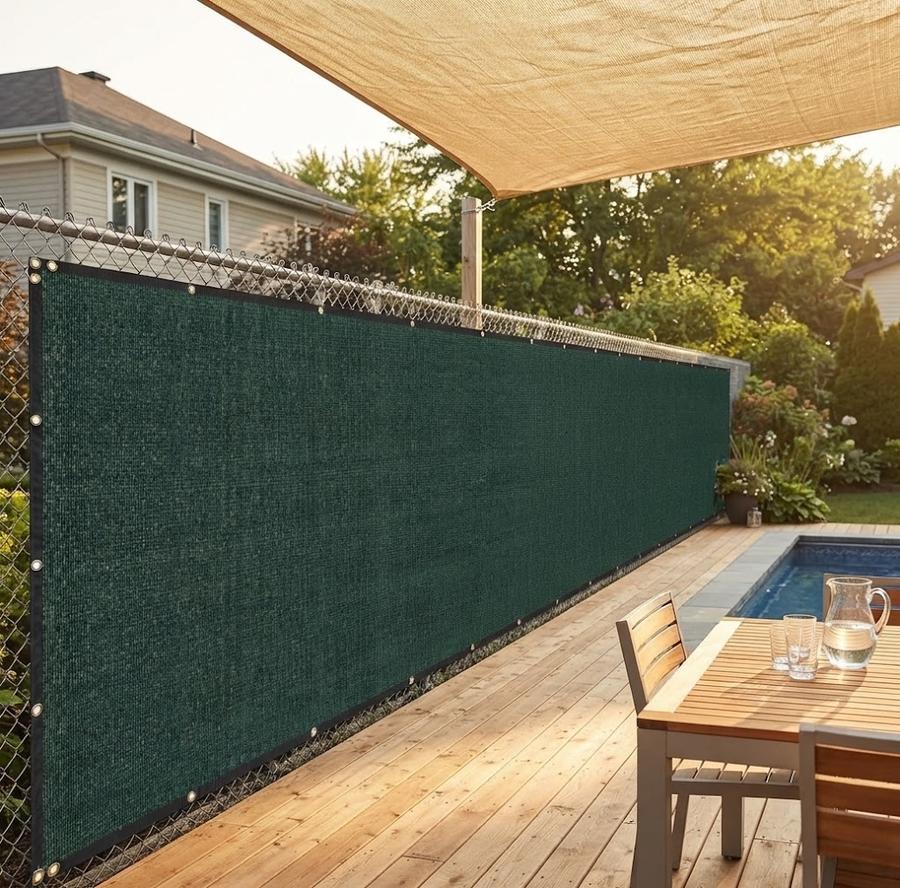
Chain-link turns a small patio into a fishbowl, and one owner said exactly that before hanging this along a lattice line to cut the neighbors' sightlines. Zip 150 GSM of 100% new HDPE onto the fence and the UV-stabilized compound keeps it from drying out or fading across a full season outdoors. Tie it on and the pull lands on 3-inch reinforced binding and three grommets per corner, not on bare mesh, which is what tears through in the first windy week. Rust-resistant copper buckles anchor the run, and owners on very windy sites swap in heavier ties within the first season. Owners who watched a solid panel catch wind like a sail through one March blow leave this weave up and let the gust pass through it instead. Check today's price; a 3-year limited warranty answers a failure inside three years of normal weather and use.
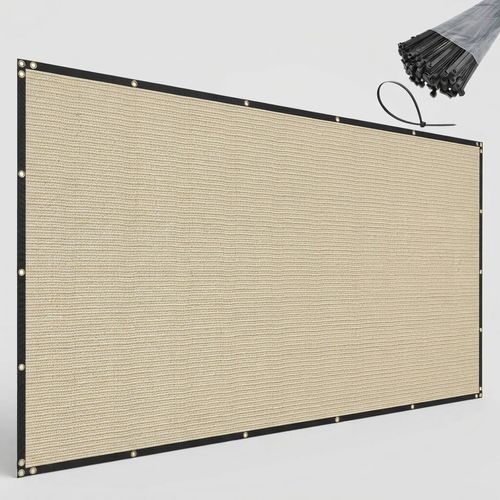
Runs 25 feet of 4-foot-tall screen along chain-link in an afternoon, tied by one person
Watch the color after a full summer outdoors: UV-stabilized 150 GSM knit and copper buckles resist drying, tearing and fading
3-year limited warranty under normal weather and use, at 4.6 stars from 225 buyers
Run 6 feet of beige screen over a gate or a dugout fence line on a Saturday morning and the sightline drops to a low railing before lunch. At 4.6 pounds it goes up with the ties in the roll, one person, no drilling. Order beige for the gate and green for the back run and both weather at one rate: the same 150 GSM UV-stabilized knit, three grommets per corner and copper buckles sit under each. One buyer hung it over an iron gate to hide tools from the street. A grounds crew ran it along softball dugouts in a high-wind county and got about two seasons before replacing only the sections that gave way. Three-year limited warranty under normal weather and use, so check today's price before the season's first install weekend.
Blanks a 6-foot gate or dugout fence line at 4.6 pounds, tied on without drilling
Pull the ties down onto copper buckles and reinforced edge binding and the load stays off the mesh through two seasons in high wind
4.6 stars from 257 buyers, including a grounds crew running it two seasons in high wind
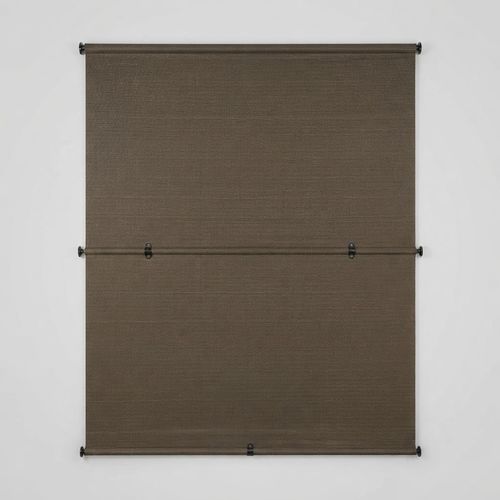
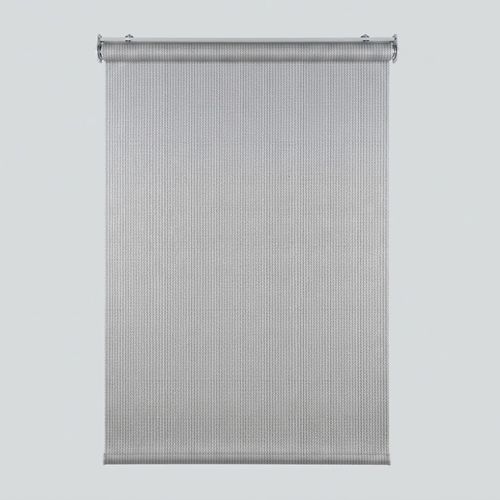
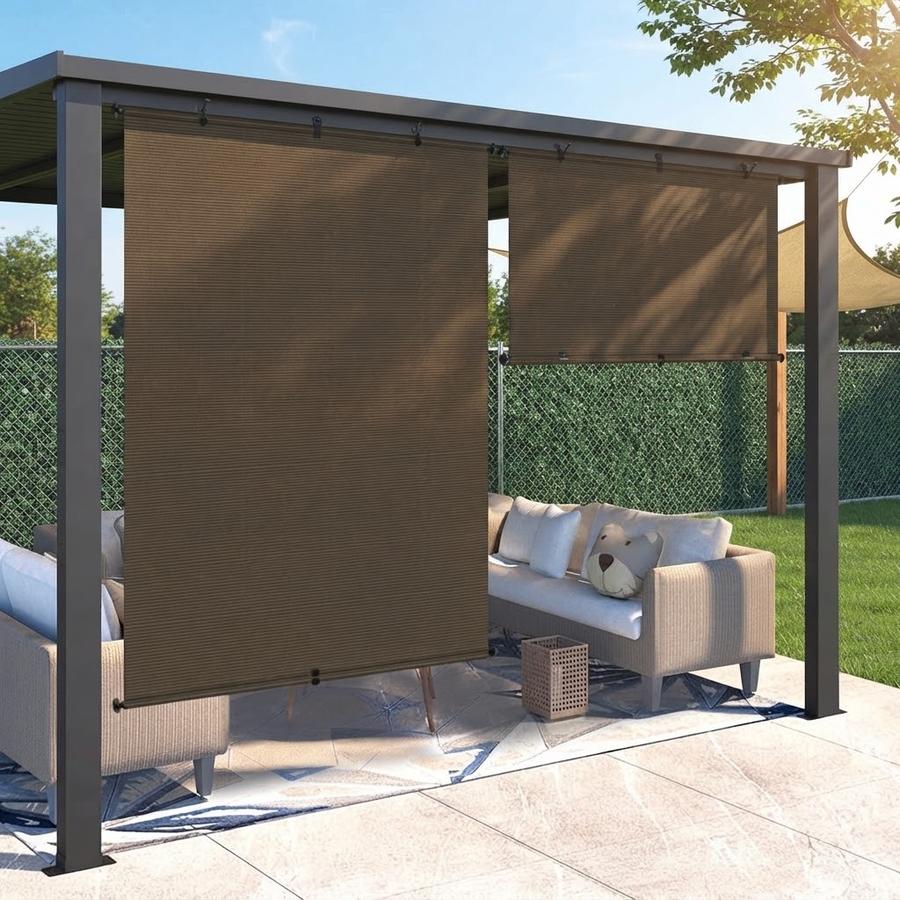
Nine years of fighting a pergola, and the answer is a shade that folds to whatever coverage the hour needs. Turn the pole to drop it full, three-quarter, half or quarter as the wind picks up midafternoon, and weighted rods along the hem keep it from swinging. Sit under it at 4 p.m. and the permeable fabric still passes air and daylight, so shade never means a dark box. One owner measured roughly 90% of the west-facing sun cut out of the living room. Order it 4 to 8 feet wide, or a custom width when the opening is not standard, before the west sun starts landing on the couch in June. Budget about an hour for the first build; the second drops to roughly fifteen minutes. Hang it, live with it a week, and a three-year warranty under normal weather and use backs what stays up; check today's price.
Drop it full at noon and back to a quarter by six as the sun crosses a west deck
Wind crosses the deck and the weighted rods along the hem hold the panel still while you eat
Three-year warranty under normal weather and use, with missing parts handled by the after-sale desk rather than a reseller chain
Corner of a patio in Arizona at 1.1 pounds: light enough to hang one-handed off a ladder, and one owner anchored the third point to the ground where no post existed. Pull the third corner tight and the double-layered lining holds where single-layer cloth stretches, at 95% of the UV blocked. Hose it off and it dries fast enough to rehang the same afternoon. Add a hardware kit and one cable rope per D-ring before install day rather than during it. Order the stated 6-foot side and expect a snugger fit than the tape suggests, which is what several owners found on the second build. Entry-level grade: check today's price before the first hot week.
Hangs one-handed at 1.1 pounds over a patio corner, washed and rehung the same afternoon
Tension the corners for a season and the double-layered lining resists the stretch that sags single-layer cloth
Blocks 95% of UV at 1.1 pounds, three points short of the commercial grade and a fraction of the weight up the ladder
Apartment rules stop you drilling a rail, so privacy has to tie on and come off again in a weekend. One owner set 50 feet of this 35-inch fabric along a railing with clear push pins and a rubber mallet in a single evening. Aluminum grommets sewn along all four sides spread the tie load, so up to 95% privacy blockage sits between you and the sidewalk without a drill. Pets stop barking at passing traffic once the sightline closes, and the breathable weave still lets a breeze and daylight through. One deck in Idaho keeps the same roll on through winter, per a multi-season owner. Three-year limited warranty under normal weather and use, and the whole roll comes down in an hour when the lease ends; check today's price.
Ties 50 feet of 35-inch fabric along an apartment railing in one evening, no drilling
Thread ties through aluminum grommets on all four sides and the load spreads down the whole 50-foot run within the same evening it goes up
Three-year limited warranty, rated 4.6 stars across 197 verified buyers
Shade needed by Saturday for a family reunion, bought as a stopgap and still on the deck a season later: that is the arc one owner described. At 3 pounds this 8-foot square goes over a pergola in minutes, and 100% new HDPE knit with double-layered lining and reinforced seams keeps the corners from stretching out. It blocks 95% of UV, and another owner mounted one along a workshop wall to make July car projects bearable. Leave it up through an afternoon shower and the deck below still gets wet, because rain passes straight through the weave, so treat it as sun cover rather than a roof. Entry-level grade: check today's price.
Throw it over a pergola in minutes at 3 pounds, bought for a weekend and kept for the season
Tension it corner to corner all season and the double-layered lining stops the stretch
Passes rain through the weave, unlike a vinyl canopy built to shed it
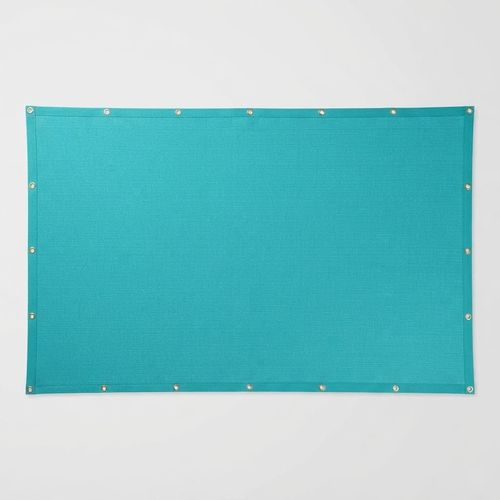
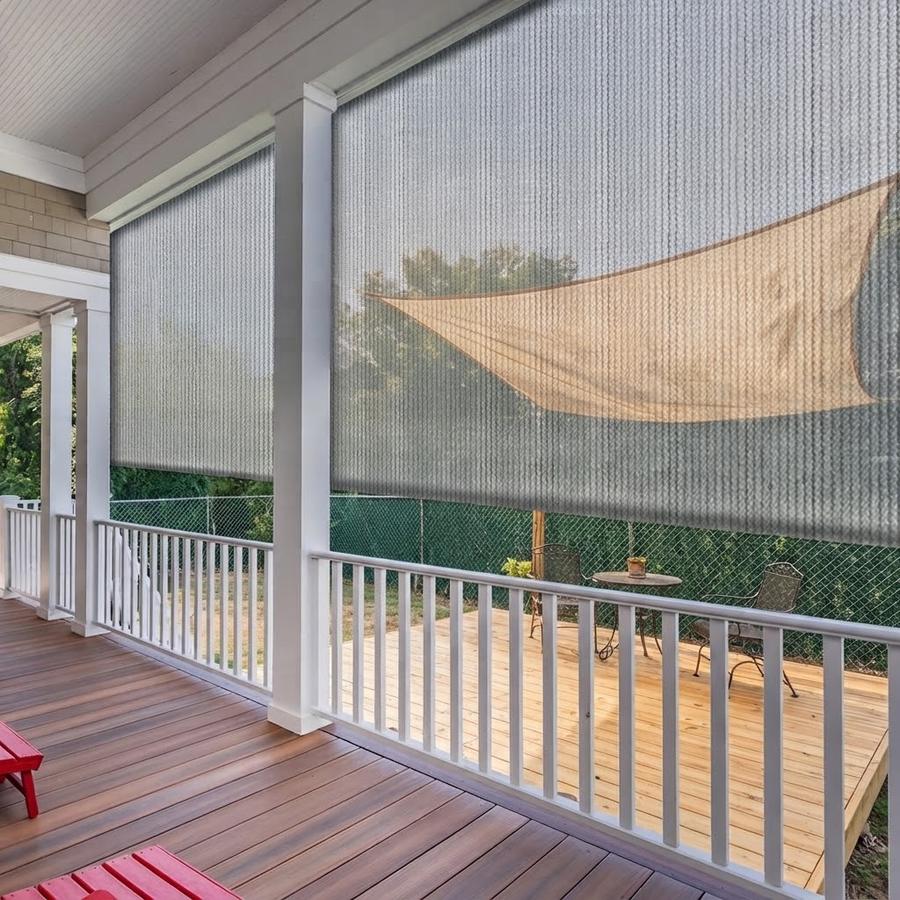
Four hundred and eighty buyers later, the note repeated most: the shade arrives folded, in a box shorter than the shade. Roll it out over a west-facing patio at 5 p.m. and 220 GSM breathable fabric drops the glare, semi-sheer so you see out and the sidewalk does not see in. One owner on a Texas patio pulls theirs down daily against a setting sun, and another reports it holding in high wind. Order it 4 to 8 feet wide and 5 to 15 feet long, or give a custom size the day you measure the opening. Budget extra time at the poles, which several owners found fiddly to connect on the first build. Leave it up through an afternoon shower and the patio below still gets wet: rain passes through the weave. A three-year warranty under normal weather and use backs it past the first season; check today's price.
Rolls 6 feet down a patio opening in one pull, semi-sheer at 220 GSM so daylight stays and the glare goes
Pull it down at 5 p.m. and the breathable knit filters glare while heat still escapes upward
480 verified buyers at 4.2 stars, the most-reviewed shade offered here
Does Mass-Produced Shade Fabric Last More Than One Summer?
Run a hand over the weave after one full summer: virgin knit polyethylene at 150 to 240 GSM holds color where cheaper recycled cloth has already chalked.
Blocks 95 to 98% of the UV That Bakes a Deck
Set a drink on the table under a tensioned sail at 2 p.m. in July and the surface stays touchable; the 98% figure belongs to the 240 GSM commercial fabric.
Neighbors Lose the Silhouette After Dark
Mount a fence screen along the deck rail and the weave takes 90 to 95% of the sightline, tight enough that a lit room stops projecting shapes at night.
4.6 Stars on the Green Screen, 4.2 on the Roll-Up
Owners tie the green screen to a fence and come back at 4.6 stars after 225 reviews; the roll-up shade sits at 4.2 after 480, and both figures stay visible.
Zip Ties in the Roll, Nothing Else to Order
One buyer stood the freestanding fence up alone in a little over an hour, working only from the poles, rails, ground spikes and ties that shipped in the box.
Three Years in Writing on Screens and Roller Shades
The warranty text on the privacy fence screens and roller shades names a three-year term under normal weather and use; the pool cover, hedge wall and commercial sail carry none.
The First Evening You Eat Outside Without Squinting
Drop the roller shade over a west-facing patio door at 6 p.m. and dinner stops happening in glare; one owner cut roughly 90% of that afternoon sun.
One Person, Zip Ties, Under an Hour on a Chain-Link Run
A 25-foot fence screen carries its ties in the roll and goes up in under an hour, one person, no specialty tool needed.
1
Measure the Span First
Run a tape along the fence line before anything goes in the cart, and the straight-edge sail arrives cut to that reading instead of to a stock rectangle.
2
Set the Anchor Points
Clip the cable from a D-ring or Super A-Ring onto the post, tree or wall bracket already standing in your yard: no new anchor sunk, no second trip to the hardware counter.
3
Tie It Down With What Shipped
Pull the zip ties, cable tighteners and duplex wire clips out of the same package the screen shipped in, and install day never stalls on a hardware-store run.
4
Tension, Then Drop One Corner
Tighten until the fabric stops rippling, then drop one corner: skip that step and the first heavy rain ponds in the middle instead of running off.
Fence Lines, Carports, Balcony Rails and Bare Poolside Decks
Chain-link, iron poles, a 20-foot carport span and a bare balcony rail each take a different grade of the same knit fabric.
Zip It to Chain-Link, Wood or Iron Without Swapping Hardware
Zip the same 150 GSM roll onto chain-link in the alley, a wood rail on the deck or an iron gate at the side of the house, and the brass grommets take every tie without a bracket bought, first zip through last. One owner hung a screen over an iron gate to hide tools from the sidewalk and never bought a bracket. Another tied one along a chain-link run to stop wind flipping empty garbage cans down the driveway every March.
Tie into the three grommets at each corner and one 25-foot run stays put through a winter of gusts, with the pull on the binding rather than the mesh.
Owners leave it up through Idaho winters: where a solid tarp catches wind like a sail, this weave passes the gust and stays on the rail.
Ties ship inside the roll; one buyer put a 50-foot balcony run up with clear push pins and a rubber mallet in a single evening.
Stand a 5-foot freestanding screen on iron poles before the first spring blow and the permeable knit passes the gust that flattens the solid panels beside it. One buyer stood the run up alone in a little over an hour after straight-line winds took down an aging wood fence, and three dogs kept the yard. Rain that ponds on a tarp drains through this weave, so nobody pushes standing water off it in March.
Drive the ground spikes into the lawn at one end and bolt the base mounts to the patio slab at the other, and one run crosses both surfaces in a single afternoon.
Slide the pole height up on the low side of a sloped yard until the 5-foot run sits level to the driveway, five minutes of adjustment before anything gets bolted down.
Runoff that a solid fence dams up crosses the mesh instead, which is why one buyer picked it after a storm ponded the lawn.
Tension the 240 GSM commercial sail across a parking bay and the wire cable inside the hem holds a shape a backyard corner never tests, season after season. Bolt each of the four corners into structural steel or a poured footing before the first cable goes on, because the sail lands at 101 pounds. Park under it at noon and 98% of the UV stops at the fabric, the highest figure printed on any grade here.
Order one cable rope per Super A-Ring before install day, or the crate sits on the slab while the hardware ships.
Pinch the two fabrics together and the 240 GSM knit reads about a third denser than the 180 GSM straight-edge sail.
Where a lighter sail works its corners loose by August, this one still pulls flat across the same bay in October.
Stand the artificial boxwood hedge wall across 72 inches of bare rail on a Saturday morning and the balcony reads as a green wall by lunch, no timber frame bolted on first. One buyer on a fourth-floor balcony calls the open space a private garden and replaces the greenery every two to three years in constant wind. Assembly runs long, though: another owner worked through the screw pack over a full evening before the wall stood.
Clip a second panel onto the first and the 6-foot run grows down the rail in the same afternoon, with no separate frame underneath.
Lifelike high-density polyethylene foliage resists fading, and one owner reported no damage after a couple of major storms.
Budget an evening for the build; the screw count is what owners flag in reviews, not the strength of the finished wall.
How Far Does the Fabric Grade Scale Between Smallest and Largest?
Measure the widest span in your yard and the figures follow it: spans cut to order, fabric from 150 to 240 GSM, shipped weight from 1.1 to 101 pounds.
2-24 ft custom span
Measure the odd corner of your patio, order the straight-edge sun shade sail cut to it, and the span dials anywhere from 2 to 24 feet a side instead of forcing a stock rectangle onto the deck.
Take the 14-foot-6 reading off your own patio and order to it; buying guides tick a custom-size box without ever printing the range.
manufacturer spec sheet
240 GSM Super A-Ring
Step up to the commercial-grade sail before a 20-foot span and the fabric jumps to 240 GSM on Super A-Rings, wire cable run inside the hem, rated for tension a patio sail never meets in a season.
Compare the corner hardware before the fabric weight once a span passes 20 feet, a step change pages built around one mid-size sail never show.
manufacturer spec, largest sail against smallest
1.1-101 lbs
Carry the 6-foot triangle sail up a ladder one-handed at 1.1 pounds; the commercial sail lands at 101 pounds and needs a structural mount before a single cable goes on.
Weigh the box against what your ladder and your mounting points hold before install day; a spread this wide gets listed one model at a time everywhere else.
manufacturer spec, item weight
3-year warranty
Buy a privacy fence screen or a roller shade and the term is written down: three years under normal weather and use, tied to those products rather than to a brand-wide promise.
Check the warranty against the exact product in your cart the minute you add it, because the stated term names some products and stays silent on others.
manufacturer warranty description
90-95% blockage
Hang a fence screen along the deck rail and the weave takes 90 to 95% of the sightline, enough that lit rooms stop throwing shapes onto the yard after dark.
Match the color to the side facing a lit window before you order, because a single headline privacy figure never says which weave reaches the high end after dark.
manufacturer spec
4.4 stars / 1,713 reviews
Add up every verified review across the shade sails, fence screens and roller shades and the number lands at 4.4 stars from 1,713 buyers, not one strong seller pulled out of the middle.
Look up the weakest number in the set before you order: the freestanding fence sits at 4.0 stars, and that is the wind test buyers ask about most.
1,713 verified buyer reviews
A Marine-Grade Quote on One Side, Knit Polyethylene on the Other
Measure your fence line at 25 feet and SunnyRoyal cuts a screen to it; measure a 20-foot carport bay and the same knit polyethylene comes back as a commercial-grade sail instead. The same tape decides the rest: a pool cover drawn over the water in October, a roller shade down the west door before dinner, a hedge wall on the balcony rail by lunch.
Price a tailored sail from a canvas fabricator and you get the other half of the picture: one buyer weighed a replacement canopy from the company that built their pergola frame, then kept the straight-edge sail instead. Weigh that trade the day you order: tailored marine cloth goes, the width you measured stays.
Jiaxing Xinrui Outdoor Products Co., Ltd knits the fabric as a private-label manufacturer, and with no showroom to walk into, the spec sheet is your only fitting room before install day. Test it against your worst wind week instead: a fourth-floor balcony owner replaces boxwood greenery every two to three years in constant wind and still keeps it over a bolted timber frame.
Read one line before you order: the pool cover holds leaves off the water through a whole snow season, and nobody stands on it, not a child and not a dog.
Nine buyers on what held, what sagged and what they would order differently, drawn from the 1,713 verified reviews behind the 4.4-star average.
★★★★★Verified Purchase
We ran a tarp with pillows underneath for years, and every March half the melt came off in pockets onto the deck. This mesh cover went on the afternoon we closed the pool and I did not touch it again all snow season. Water passes straight through and the leaves stay up top. Pulling it off alone in spring is the part I did not expect, since a wet vinyl cover used to fight two of us across the deck.
Denise R. — Mesh Pool Safety Cover
★★★★☆Verified Purchase
Straight-line winds took down our aging wood fence and we have three dogs that need the yard. I had the whole freestanding run standing in a little over an hour, by myself, working from the poles and spikes in the box. The instructions are pictures only and took some staring at. It is not a permanent fence and I did not buy it as one, but the dogs stayed in and the yard closed off the same weekend.
Marcus T. — Freestanding Privacy Fence Screen
★★★★★Verified Purchase
I did not buy this for privacy at all. My empty garbage cans sit against a chain-link run in the alley and every March the wind sent them down the driveway. Tied the screen on in an afternoon with the ties that came in the roll, and the cans have stayed put through two spring blows since. It looks like fabric in the sun rather than a sheet of plastic, which I did not expect at this weight.
Ellen K. — Green Privacy Fence Screen
★★★★★Verified Purchase
Put the balcony run up in one evening with clear push pins and a rubber mallet, nothing else. It gives real privacy from the units across from us and we can still see out. Held through an Idaho winter and the wind storms that come with it, and the color has not gone chalky the way the last screen did after one summer. My husband wanted something we could take down when we move, and this comes back off the rail in minutes.
Priya S. — Balcony Privacy Screen
★★★★☆Verified Purchase
Our patio faces west and the Texas sun at 6 p.m. made dinner outside impossible. The shade drops the glare almost entirely and we still get air through the weave, so the porch does not turn into an oven. One warning worth knowing: it ships folded in a standard box, so do not panic when a full-height shade arrives in a small carton. The poles took some patience and one bungee tie is the piece I would upgrade.
Ray M. — Patio Roll-Up Shade
★★★★☆Verified Purchase
Assembly is the honest weak point. The first roller shade took me about an hour even being handy, then the next one dropped to roughly fifteen minutes once I knew the sequence. Hardware quality is first class and the fixtures suited my location exactly. It is a folding shade rather than a true roll, which a previous review warned me about, and the size came in on point against my measurement. It washes down with a hose.
Gordon W. — Foldable Patio Roller Shade
★★★★☆Verified Purchase
In Arizona you do what you can for shade. This triangle fit the corner of our patio and we anchored the third point to the ground, since there was no third high structure to run to. Washes on cold and hangs dry in an hour. It runs a touch small against the printed span, so measure anchor to anchor rather than trusting the label, and order the next size up if your corner is tight.
Carla B. — Triangle Shade Sail
★★★★★Verified Purchase
Installed this on the side of my workshop so I can work outside on cars and projects. The difference in surface temperature under it is enough that I will start a job in the afternoon now instead of waiting for evening. Took a few minutes to set up over the pergola frame and the color matches the wood slats. Rain runs off rather than sitting, which was my worry going in.
Thomas L. — Rectangle Shade Sail
★★★★☆Verified Purchase
My first shipment arrived with pieces missing and I wrote an angry review that night. The after-sale team reached out, had the replacements delivered before our build date, and I came back to rewrite this. The finished run is sturdy and looks better than the temporary fencing I priced elsewhere. Directions are pictures with no words, which is the one thing I would fix.
Janine O. — Freestanding Privacy Fence Screen
Triangle, Straight-Edge or Commercial: Which Sail Carries the Span
The same knit fabric arrives at 95%, 95%-plus and 98% UV block depending on which sail your span actually calls for.
Three sail grades against the same criteria, from the manufacturer spec sheet
Criterion
Straight-edge sail (180 GSM)
Triangle sail (6 ft a side)
Commercial-grade sail
UV block printed on the fabric
95% and above on 180 GSM knit
95% on knitted HDPE
98% on 240 GSM knit
Shipped weight
36 pounds
1.1 pounds
101 pounds
Corner hardware
Brass grommets on every edge, stainless steel D-rings at the corners
D-ring at each of the three corners
Super A-Ring with wire cable run inside the hem
Edge construction
Reinforced edge with rustproof grommets
Double-layered lining with reinforced seams
240 GSM fabric hemmed over an internal wire cable
Mounting hardware in the box
Zip ties, ropes and bungee balls included
Fabric only, hardware kit sold separately
Fabric only, one cable rope required per A-Ring
Span you can order
2 to 24 feet a side, cut to your measurement
6 by 6 by 6 feet, custom sizes made on request
26 by 40 feet, one fixed span
Sagging, Fading, Rust: What Actually Goes Wrong Out There
Watch a sail through one wet spring: water pools, color chalks out, grommets rust; copper buckles and UV-stabilized 150 GSM knit answer two of the three.
Water Pools in the Middle and the Fabric Sags
Hang all four corners at the same height and the first heavy rain collects in the center until the weave stretches or splits. Set one corner lower before final tensioning, then tune with turnbuckles once it is up: that is the difference between a taut sail in April and a sagging one by June.
Neighbors Still Read Silhouettes at Night
Your neighbor walks past at 9 p.m. with your kitchen light on, and mesh rated at 90 to 95% blockage still passes the shape. One buyer of the freestanding screen watched body and shadow stay visible from the sidewalk after dark. Treat the mesh as daytime privacy first, then hang a solid panel behind the one stretch you sit in after the porch light goes on.
90-95% visibility blockage
Sustained Gusts Tear the Sail or Pull the Post
Leave the sail up through an ordinary blow and the weave passes it; a sustained gust past that range takes the material or strains the anchor. Build a planned failure point into the install, a lower-rated carabiner at one corner, and the first storm past that rating drops the sail instead of pulling the fascia off the house. One grounds crew ran screens through a tornado warning and replaced only the sections that gave way.
Color Washes Out After One Full Summer
Color that chalks out by August is the complaint the 150 GSM screen answers: owners across several seasons report it holding, the UV-stabilized compound slowing drying, tearing and fading. Rinse the fabric with a hose the week it starts to dull and every piece here comes back clean on plain water, no detergent, no ladder time. Boxwood greenery is the exception in constant wind, where a fourth-floor owner replaces it every two to three years.
Grommets Rust Where the Rain Sits
Copper buckles on the fence screens, and brass grommets with stainless steel D-rings on the straight-edge sail, are what owners still find clean after two winters on the coast. Swap in standard steel rings from a hardware counter and those are what surface-rust first on a mixed install. Rinse the corners after a salt-air week and the hardware outlasts the fabric.
The Fabric Tears and You Are Out the Cost
A screen that splits in its second season still falls inside the written three-year term for normal weather and use. The pool cover, the hedge wall and the commercial sail carry no such text, and for those the retailer return window is the fallback. Keep the packaging through the first heavy weather and photograph the install, then pick a size and compare specs side by side.
3-year limited warranty, screens and roller shades
The First Afternoon, the First Storm, the Third Summer
Hang a full run before dinner, watch the first storm pass through the weave, then check the color in the third summer.
Day 1
Day 1, after work: cut the ties, run the 25-foot screen along the chain-link before dinner, and send it back inside the retailer return window if it falls short of your tape.
Week 1
Week 1: the deck stops cooking by 4 p.m. and the neighbor's kitchen window disappears behind the weave, which is the point most buyers stop checking on it and start using the space.
Month 1
Month 1, first real storm: gusts pass through the permeable knit instead of loading it, and rain drains rather than collecting in the middle, provided one corner sits lower than the other three.
Year 1+
Year 1 and beyond: color holds on the UV-stabilized fabric, and if a screen or roller shade fails under normal weather, the written three-year term is what you fall back on.
Ready for Day 1? Pick the span you measured, then compare the sail grades side by side.
Questions Buyers Ask Before They Measure
Warranty scope, UV figures, wind behaviour and install time, answered against the spec sheet and the buyer record.
What does SunnyRoyal actually make?
SunnyRoyal knits polyethylene into five outdoor families: sun shade sails, privacy fence screens, mesh pool safety covers, patio roller shades and artificial boxwood hedge walls. Jiaxing Xinrui Outdoor Products Co., Ltd manufactures them as a private label. The common thread is knit HDPE fabric between 150 and 240 GSM, mounted a different way for each surface.
How much UV does the fabric block?
The printed figure runs 95 to 98% depending on grade: 95% on the knitted triangle sail, above 95% on the 180 GSM straight-edge sail, and 98% on the 240 GSM commercial fabric. Each figure is printed per model rather than as one brand-wide claim, so read it against the exact product before you order.
What warranty is actually written down?
A three-year limited warranty under normal weather and use is written into the privacy fence screens and the roller shades. The pool safety cover, the artificial hedge wall and the commercial sail carry no such written term. For those, the retailer return window is the fallback, so check the warranty text against the exact product in your cart.
Is a mass-produced shade sail worth it against a custom-made one?
A tailored marine-grade canopy from a canvas fabricator buys thicker cloth and a fitted shape; the straight-edge sail here buys the width you measured at a fraction of the wait. One buyer priced a replacement canopy from the company that built their pergola frame, then kept the straight-edge sail instead. Weigh the trade the day you order.
How do I stop water pooling on a shade sail?
Drop one corner lower than the other three before final tensioning, then tune with turnbuckles once it is up. Hang all four corners level and the first heavy rain collects in the middle until the weave stretches. That single adjustment is the difference between a taut sail in April and a sagging one by June.
How does the fabric handle strong wind?
Permeable knit passes gusts that flatten solid panels: one buyer stood a freestanding screen up after straight-line winds took down an aging wood fence, and owners leave screens on the rail through Idaho winters. Past a sustained blow the material or the anchor gives, so build a planned failure point with a lower-rated carabiner at one corner.
Is the fabric recycled or virgin polyethylene?
The fence screens are knit from 100% new, non-recycled HDPE rather than a recycled blend. That is what keeps color on a fence line past the four-to-six-year mark where cheaper recycled cloth chalks out after a season. The compound is UV-stabilized, which slows drying, tearing and fading.
What sizes do the shade sails come in?
The straight-edge sun shade sail is cut to your measurement anywhere from 2 to 24 feet a side, so an odd patio corner stops being the reason to call a canvas shop. Fixed spans also exist: a 6-foot triangle, an 8-foot rectangle, and a 26 by 40 foot commercial sail on Super A-Rings.
Can one person install this alone?
A full-length fence screen carries its own zip ties in the roll and goes up in under an hour, one person, no specialty tool. One owner assembled the whole freestanding fence alone in a little over an hour. The roller shades are the exception: owners report about an hour for the first unit, then roughly 15 minutes each after that.
What if the size is wrong when it arrives?
Measure the span before anything goes in the cart, then check the piece against your tape the day it lands and send it back inside the retailer return window if it falls short. Owners flag the triangle sail as running slightly small, so measure the anchor-to-anchor distance rather than the printed span.
Are any of these waterproof?
None of the knit fabric is waterproof, and that is deliberate: rain drains through the weave instead of ponding on it, and gusts pass rather than loading the anchors. The mesh pool safety cover works the same way, letting melt through while leaves stay on top. For rain cover you want a solid canopy, not this knit.
How private is a privacy fence screen, in numbers?
The weave takes 90 to 95% of the sightline, tight enough that daytime privacy is settled and a neighbor sees color rather than detail. After dark it changes: one buyer watched body and shadow stay readable from the sidewalk with the kitchen light on. Treat it as daytime privacy, then hang a solid panel behind the stretch you sit in at night.
What is GSM and why does it matter here?
GSM is grams per square metre, the weight of the fabric itself. The range here runs 150 GSM on the fence screens to 240 GSM on the commercial sail. Pinch the two together and the 240 GSM knit reads about a third denser than the 180 GSM straight-edge sail, which is what carries a full carport span through a season.
Does the fabric let air through?
Yes, and that is the point of a knit rather than a coated sheet. Air crosses the weave, so a roller shade drops the glare without turning a porch into a hot box, and one owner noted the material still lets air circulate on a 5-foot roller shade. Where a solid tarp catches wind like a sail, this passes the gust.
Is this line independently certified?
No independent certification is published for the UV or blockage figures. Those numbers come from the manufacturer spec sheet. What is independently visible is the buyer record: 4.4 stars across 1,713 verified reviews, with the freestanding fence the weakest at 4.0 and the green screen the strongest at 4.6.
Which piece suits a fully exposed, unsheltered spot?
Take the 240 GSM commercial sail with the wire cable run inside the hem, and bolt each of the four corners into structural steel or a poured footing. It is the heaviest piece here, so the mount matters more than the fabric. A lighter patio sail works its corners loose by August on a fully exposed span.
How much does each sail weigh?
The spread is wide: the triangle sail lands at 1.1 pounds and goes up a ladder one-handed, the straight-edge sail at 36 pounds, and the commercial sail at 101 pounds. Weigh the box against what your ladder and your mounting points hold before install day, because the top end needs a structural mount.
What is a Super A-Ring and which sail has it?
A Super A-Ring is the reinforced corner fitting on the commercial-grade sail, with wire cable run inside the hem so tension spreads along the edge rather than tearing at the corner. Order one cable rope per ring before install day, or the crate sits on the slab while the hardware ships.
Do the fence screens come with hardware?
Zip ties ship inside the roll, so install day never stalls on a hardware-store run. The freestanding version goes further: poles, rails, ground spikes and base mounts are sorted in the same box. The bare sails are the exception, where the fabric ships alone and the hardware kit is a separate order.
What is the pool safety cover made of?
Durable polyethylene mesh with a steel wire rope hemmed into the edge, plus cable tighteners, duplex wire clips and installation tools packed in the box. Water passes through the weave while leaves stay on top, which is why one owner logged no maintenance across a whole snow season.
How wide can I order a roller shade?
The patio roller shades run 4 to 8 feet wide at 6 feet of drop, which covers a standard west-facing patio door and most porch bays. Measure the opening before ordering: one owner bought a 7-foot width for a wider patio deliberately, to test the shade before committing to full coverage.
What holds the fence screen edges together?
Brass grommets set into a reinforced binding, three per corner, with copper buckles on the fence screens and stainless steel D-rings at the corners of the straight-edge sail. Tie into the grommets rather than the mesh and the pull lands on the binding, which is why one full run stays put through a winter of gusts.
How tall is the boxwood hedge panel?
The hedge wall panel measures 72 inches long by 36 inches high by 6 inches deep, and it stands without a timber frame underneath. Clip a second panel onto the first and the run grows down a balcony rail in the same afternoon. Budget an evening for the build: the screw count is what owners flag.
Is the commercial sail overkill for a residential backyard?
For a patio corner, yes. The 240 GSM sail is built for a carport bay or a parking area, needs structural steel or a poured footing at each corner, and is the heaviest piece here. Below that width the straight-edge sail cut to your measurement does the same job with hardware you can lift alone.
Is hardware from a local store compatible with these sails?
Turnbuckles and carabiners from a hardware counter thread onto the D-rings without an adapter, and many owners tension that way. Watch the metal: standard steel rings surface-rust first on a mixed install, while the brass grommets and stainless D-rings that ship on the sail still come up clean after two winters on the coast.
How trustworthy is the star rating?
It is thin in places and solid in others. The green fence screen carries 4.6 stars across 225 reviews and the roll-up shade 4.2 across 480, both large enough to read. The hedge wall sits at 4.7 from only a handful of reviews, which is too few to lean on. Total across all products: 4.4 stars from 1,713 buyers.
Who manufactures these?
Jiaxing Xinrui Outdoor Products Co., Ltd knits the fabric and builds the finished pieces as a private-label manufacturer. There is no showroom to walk into and no independent brand history to read, which is exactly why the spec sheet and the buyer record carry the weight here.
Does anyone answer if parts are missing?
Yes, and one buyer documented it: the freestanding fence arrived with pieces missing, the after-sale team shipped replacements before the build date, and the buyer went back and rewrote the review to say so. Keep the packaging through the first heavy weather and photograph the install before you contact anyone.
Are the UV percentages independently tested?
The 95 to 98% figures come from the manufacturer spec sheet, printed per product rather than tested by a third party. Treat them as a comparison scale between grades rather than a lab result: the gap between the 150 GSM screen and the 240 GSM commercial fabric is real and consistent across the range.
Will the color fade after a full summer in direct sun?
The UV-stabilized 150 GSM screen is what answers that complaint, and owners across several seasons report it holding where cheaper cloth chalks out by August. The exception is the artificial boxwood in constant wind: a fourth-floor balcony owner replaces the greenery every two to three years.
Is the pool cover safe for a toddler?
No. Nobody stands on it, not a child and not a dog. It is a debris and winter cover that sheds melt through the weave and keeps leaves off the water; it is not a load-bearing safety barrier. Fence the pool separately if a small child uses the yard.
Where can I buy these?
Every product on this page links straight to the retailer listing, where pricing and stock update on their own. Pick the span you measured first, then check today's price on that exact model rather than on the closest stock rectangle.
Can I leave it up through winter?
Fence screens stay up year-round for many owners, including through Idaho winters and wind storms. Shade sails are the judgment call: snow load is what a knit sail is not built for, so drop it before the first heavy fall. The mesh pool cover is designed to sit through the whole snow season.
What posts do I need for a large sail?
Past a carport-width span you want structural steel or a poured footing at every corner, not a fence post. The commercial sail is the heaviest piece here before wind load. Under that span, an existing post, a mature tree or a wall bracket already standing in the yard takes the cable without a new anchor sunk.
Will the freestanding screen tip over in wind?
The permeable knit passes gusts instead of catching them, which is why the run survives blows that flatten solid panels. Drive the ground spikes into lawn at one end and bolt the base mounts to the patio slab at the other so a single run crosses both surfaces. Owners rate this one lowest at 4.0 stars, and wind is the topic.
Can I hang a shade sail over grass?
Yes, provided the anchors are not in the grass. One owner in Arizona ran the third corner of a triangle sail to a ground anchor because no third high structure existed, and the corner of the patio still got covered. What the sail needs is three or four fixed points, not a hard surface underneath.
Can a screen work as a windbreak rather than for privacy?
That is a common reason owners buy it. One buyer tied a screen along a chain-link run purely to stop wind flipping empty garbage cans down the alley every March. The knit slows the gust without acting as a solid barrier, so the fence itself never takes a sail's worth of load.
Mesh pool cover or solid: which for a yard full of trees?
Mesh, for the drainage. A solid cover under heavy leaf fall needs pillows and a pump, and half the melt comes off in pockets onto the deck in March. The mesh sheds water through the weave and keeps leaves on top. The tradeoff: fine debris blows under the corners, which owners flag as the one weak point.
Shade sail or a permanent awning?
An awning wins on rain and on staying up all year. A sail wins on span, on cost of failure and on coming down before a storm. If the goal is a cooler deck at 2 p.m. in July, the sail blocks 95% and above of the UV for a fraction of the install work, and it drains rather than loading a frame.
How does this compare to more expensive shade brands?
The fabric competes on the printed numbers: 150 to 240 GSM knit at 95 to 98% UV block, brass grommets and stainless D-rings, which is the same spec language premium brands publish. What you give up is independent testing, a brand history and a showroom. What you get back is a span cut to your measurement.
Triangle sail or the straight-edge: which do I need?
Take the triangle for a patio corner where two walls and one post are all you have, and for its 1.1-pound weight up a ladder. Take the straight-edge sail when you want the span cut to your tape reading, anywhere from 2 to 24 feet a side, and when the deck is a rectangle rather than a corner.
Privacy fence screen or an artificial hedge wall?
The screen goes up in under an hour on an existing fence and costs an afternoon. The hedge wall stands on a bare rail without a timber frame and reads as greenery rather than fabric, but the build takes an evening of screws and the greenery needs replacing every two to three years in constant wind.
No-dig fencing against traditional post-hole fencing?
No-dig wins on time and on reversibility: ground spikes and base mounts put a 5-foot run across lawn and slab in a single afternoon, and it comes back up when you move. Post-hole fencing wins on security, since a knit screen on iron poles is a visual and wind barrier rather than a containment fence.
Does it ship folded or rolled?
Screens ship rolled, and the zip ties are inside the roll. Roller shades ship folded into a standard-sized box, which surprises buyers expecting a full-height carton; the label on the box says so. Nothing is damaged by the fold, and the fabric hangs flat within a day of going up.
How do I clean it?
Plain water from a hose, no detergent and no ladder time. Rinse the fabric the week it starts to dull and every piece here comes back clean. Owners of the triangle sails also wash them cold and hang them wet to dry. Rinse the corners after a salt-air week and the hardware outlasts the fabric.
Will the hardware rust over time?
The copper buckles on the fence screens and the brass grommets with stainless steel D-rings on the straight-edge sail are what owners still find clean after two winters on the coast. Standard steel rings swapped in from a hardware counter are what surface-rust first on a mixed install.
How long should this actually last?
Owners report the fence screens holding color and structure past the four-to-six-year mark on virgin HDPE. Sails run shorter under constant tension, with buyers reporting a couple of seasons on the lighter grades. Artificial boxwood in constant wind is the short end at two to three years.
Can I replace just one part?
For the freestanding fence, yes: poles, rails and fabric are separate components, and one grounds crew ran screens through a tornado warning and replaced only the sections that gave way. For a sail, the fabric is one piece, so a tear means a new sail. Hardware is standard and replaceable from any counter.
Knit Fabric on Real Fences, Decks and Water
Eight installs across chain-link, balcony rail, pergola frame, carport post and an inground pool edge.